








5% of Borrowers Facing Cash Flow Shortfall Amid Rising Interest Rates
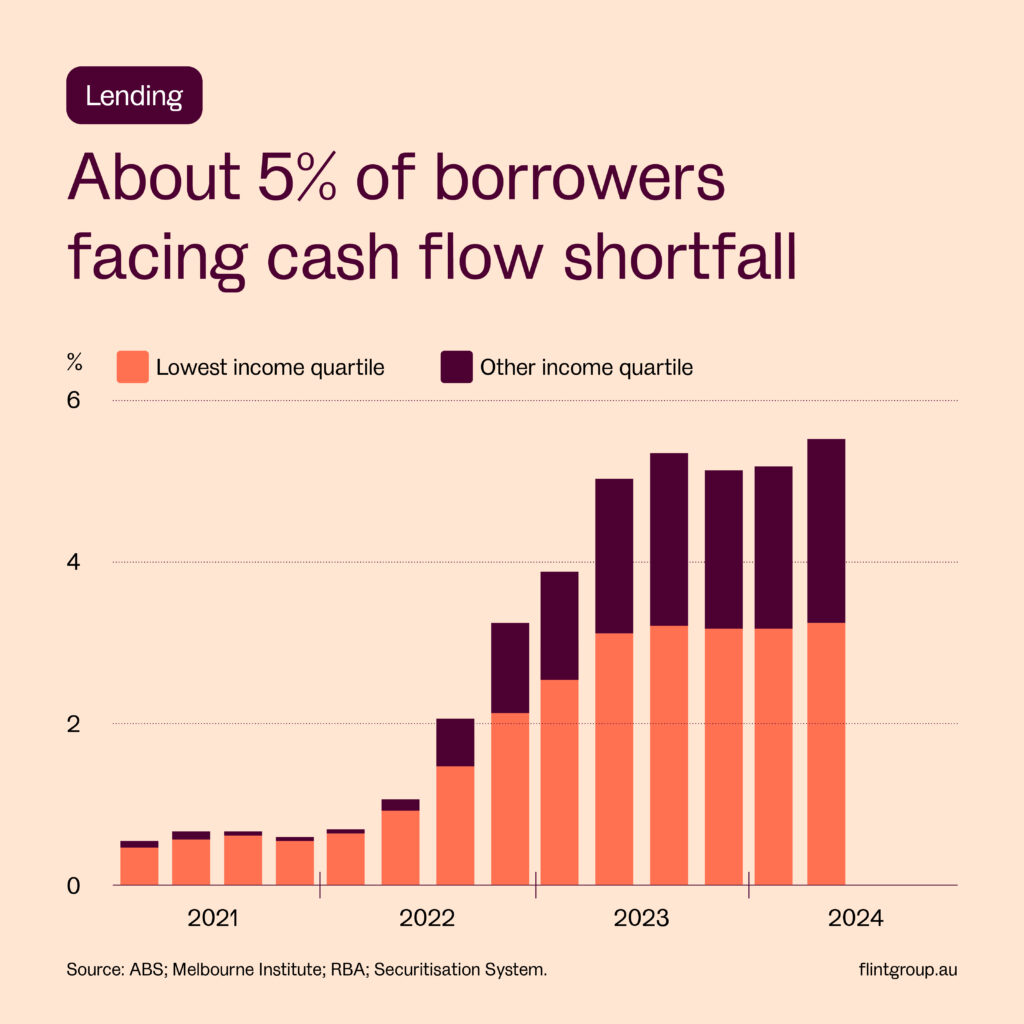
Reading Time: 3 minutesRising interest rates have led to financial strain for a subset of Australian mortgage borrowers, with about 5% facing a cash flow shortfall, according to Reserve Bank of Australia (RBA) Governor Michele Bullock. While higher rates have been deemed essential to curbing inflation, they have also put pressure on households with variable-rate loans. Governor Bullock acknowledged that higher interest rates are a necessary evil in the battle against inflation. “Inflation causes hardship, particularly for the more vulnerable in our community,” she said. However, she also admitted that these higher rates have left some mortgage holders in a vulnerable position, with many “feeling the squeeze” as the cost of borrowing continues to rise. For a small but significant group of borrowers, their situation is particularly challenging. Bullock revealed that approximately 5% of owner-occupiers with variable-rate loans are in a precarious position, where their essential spending combined with mortgage repayments exceeds their income, leaving them with a cash flow shortfall. “Although this group is fairly small overall, those in it have had to make quite painful adjustments to avoid falling behind on their mortgage repayments,” Governor Bullock said. These adjustments include cutting back on non-essential spending, opting for lower-quality goods and services, dipping into savings, or working extra hours. The financial stress affecting these borrowers highlights the impact of the RBA’s monetary policy on household budgets. While the goal of reducing inflation remains a priority, the road ahead may continue to be difficult for some mortgage holders.
Property Investor Borrowing Surges 49.2% Since January 2023
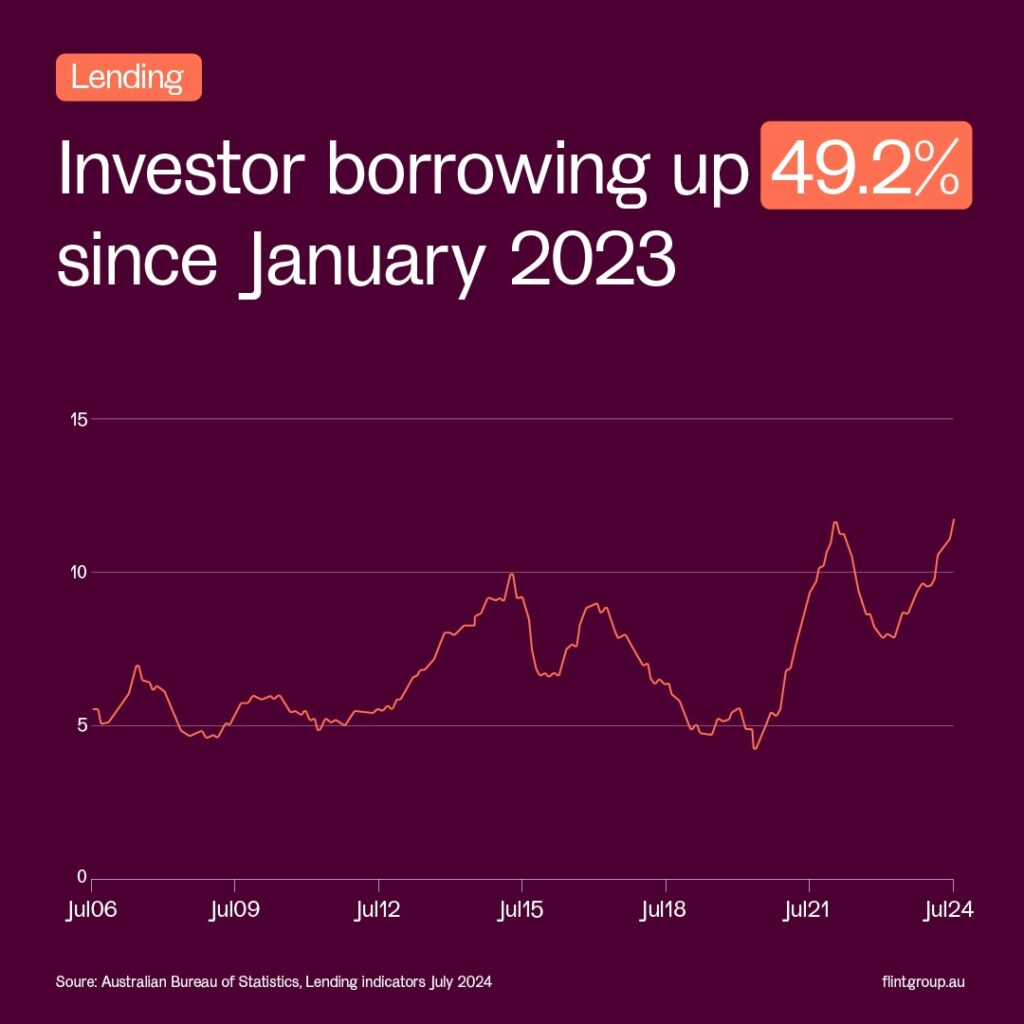
Reading Time: 3 minutesInvestor borrowing in Australia’s property market is on the rise, nearing record levels and showing a strong resurgence. According to the latest data from the Australian Bureau of Statistics, property investors signed up for $11.708 billion worth of home loans in July 2024, marking a significant 49.2% increase since January 2023. This upward trend follows a steady decline that began after investor borrowing hit an all-time high of $11.762 billion in January 2022, only to bottom out at $7.849 billion in January 2023. The strong resurgence in investor borrowing over the past 18 months suggests renewed confidence in the market as investors seek to capitalise on rising property prices and rents. Comparatively, borrowing by owner-occupiers has risen by 22.5% over the same period. While still strong, it is clear that investors are driving much of the activity in the market. What is fuelling this investor activity? Several factors seem to be at play, including rising property values, increasing rental income, and widespread speculation that interest rates may fall in early 2025. With the potential for declining rates, investors may see this as a prime opportunity to secure property at current price levels before borrowing costs decrease further. As the property market continues to evolve, all eyes will be on how investor borrowing trends impact market dynamics in the months ahead.